244

Mera Photo AI @meraphotoai
513 views
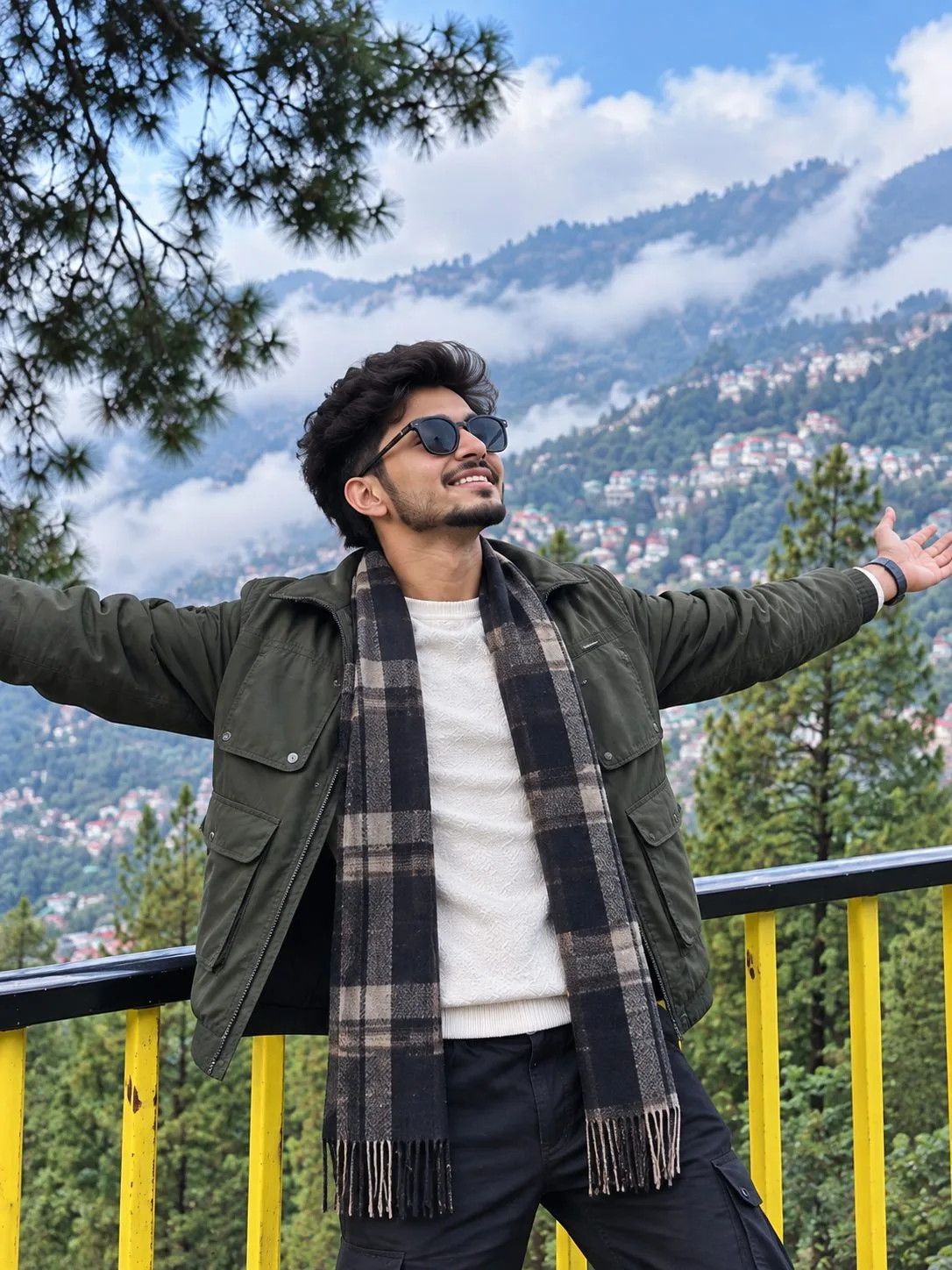
Close-Up Boy Photo in Shimla Mountains
Use my uploaded photo as the identity reference. Preserve my facial identity, facial structure, natural Indian skin tone, approximate age and recognisable facial features accurately.
Create an ultra-photorealistic vertical 3:4 close-up environmental travel portrait at a scenic mountain viewpoint in Shimla, Himachal Pradesh.
FRAMING & COMPOSITION:
Create a close portrait framed approximately from the upper thighs upward.
Bring me very close to the camera so my face, hairstyle, sunglasses, jacket, sweater and scarf are highly detailed.
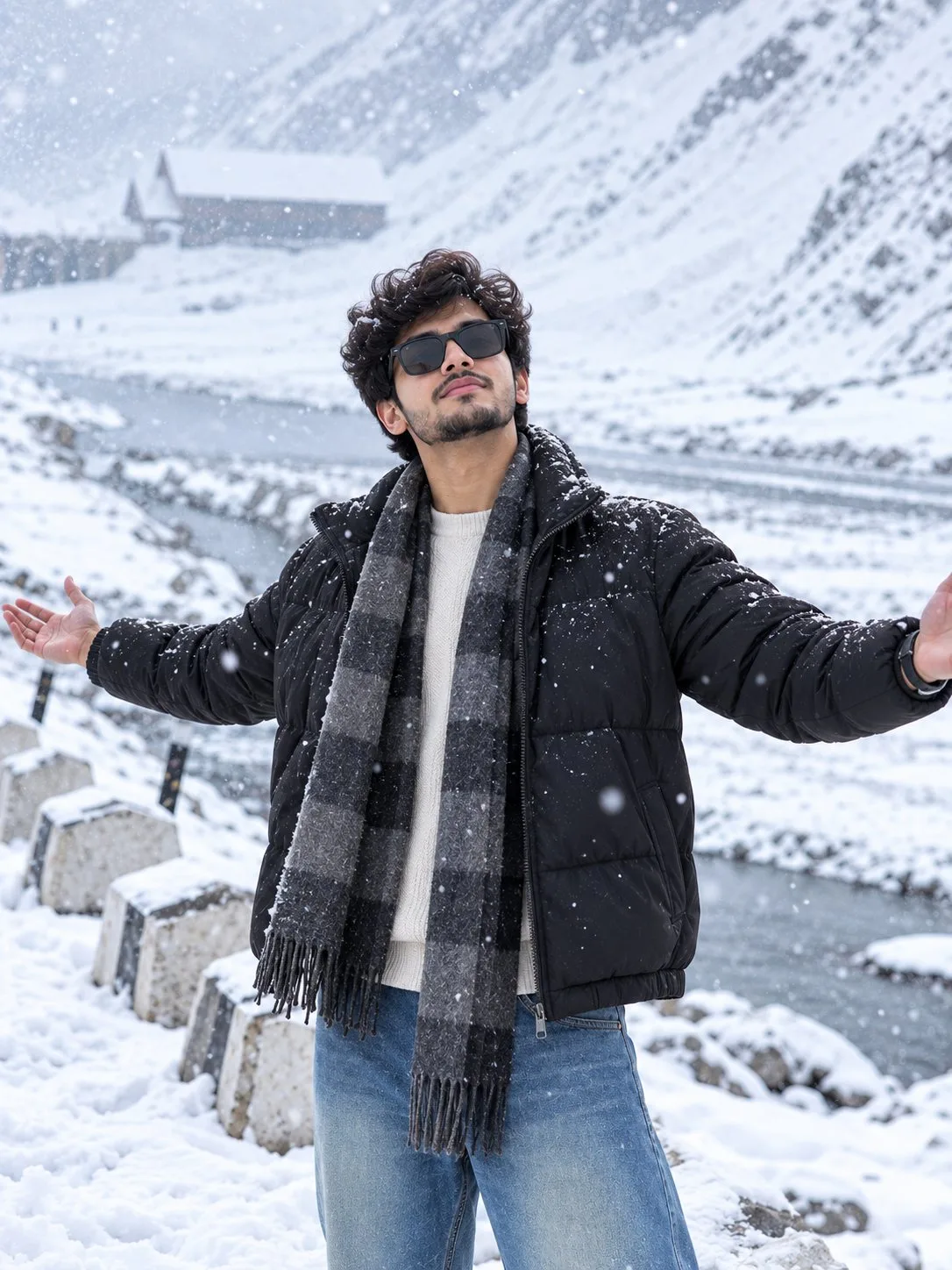
Keep both arms stretched widely outward and slightly upward, extending naturally toward both edges of the frame.
Position me in front of a distinctive yellow-and-black metal viewpoint railing.
Preserve the forest-covered Shimla hills, hillside houses, pine trees and bands of low white clouds prominently in the background.
POSE:
Stand confidently with the upper body open toward the camera.
Stretch both arms completely outward in a joyful, carefree pose.
Keep both palms open with naturally separated, relaxed fingers.
Turn the head toward the upper-right side of the frame.
Lift the chin slightly and look upward toward the mountains and sky.
Use a genuine broad smile with naturally visible teeth.
The expression should communicate happiness, freedom and enjoyment of the mountain atmosphere.
FACE & IDENTITY:
Accurately preserve the identity from my uploaded photograph.
Maintain my real face shape, forehead, eyebrows, nose, lips, cheeks, jawline, ears and natural Indian skin tone.
Keep a neatly shaped natural moustache and short beard along the jaw and chin.
Show realistic skin pores, subtle blemishes, natural under-eye texture, individual beard hairs and believable facial asymmetry.
Do not over-smooth or artificially beautify the skin.
HAIRSTYLE:
Use thick, voluminous medium-length black hair.
Style it naturally upward and backward with loose waves and soft curls.
Keep strong volume around the front and crown.
Show individual strands, realistic density, subtle flyaways and a believable natural hairline.
SUNGLASSES:
Wear premium black rectangular sunglasses with softly rounded edges.
Use realistic dark lenses with subtle reflections of the bright cloudy mountain environment.
Keep natural frame thickness, hinges and positioning.
OUTER JACKET:
Wear a stylish dark olive-green lightweight utility jacket.
Keep the jacket completely open from the front.
Use a contemporary relaxed fit with a structured collar.
Include realistic flap pockets, metallic snap buttons, zipper construction, seams and stitching.
Show authentic slightly wrinkled outdoor fabric with natural folds around the shoulders, elbows and waist.
INNER SWEATER:
Under the jacket, wear a clean cream/off-white textured crew-neck sweater.
Use a subtle knitted geometric texture.
Show individual knit fibres, collar ribbing, waistband ribbing, natural fabric folds and realistic thickness.
SCARF:
Wear a long premium plaid wool scarf loosely around the neck.
Use charcoal black, dark grey, taupe and muted beige checks.
Allow both scarf ends to hang vertically down the front, reaching below the waist.
Show detailed wool weave, natural folds, slightly fuzzy fibres and individual fringed tassels.
TROUSERS:
Wear modern relaxed black cargo trousers.
Show the upper portion prominently in the close framing.
Include realistic cargo pockets, seams, stitching, fabric grain and natural creasing.
WATCH:
Wear a minimal black wristwatch with a dark round dial.
Show realistic materials and subtle environmental reflections.
VIEWPOINT RAILING:
Preserve the distinctive railing directly behind the subject.
Use a black horizontal upper rail with bright yellow vertical metal bars.
Show small realistic scratches, chipped paint and outdoor weathering.
The railing should remain recognisable without distracting from the subject.
PINE TREES:
Frame the portrait with natural Himalayan pine/deodar vegetation.
Show dark pine branches entering from the upper-left corner.
Keep a tall green pine tree visible toward the right background.
Show individual branches and needles with natural irregularity.
SHIMLA HILLS:
Show steep forest-covered Shimla hills filling most of the background.
Cover them densely with pine and deodar trees.
Scatter numerous small houses and buildings naturally across the slopes.
Use realistic white, cream and pastel buildings with occasional red, green and blue roofs.
The hillside settlement must follow the natural mountain contours.
CLOUDS & MIST:
Show dramatic bands of low white mountain clouds drifting horizontally across the hills.
Allow clouds to pass naturally in front of sections of forest and hillside houses.
Create several layers of atmospheric depth.
Keep the clouds soft, volumetric and physically believable rather than looking like artificial smoke.
SKY:
Show patches of clean blue Himalayan sky behind soft white clouds.
Maintain realistic atmospheric colour and brightness.
LIGHTING:
Use bright but soft natural mountain daylight.
Illuminate the face clearly and evenly.
Maintain realistic shadows around the sunglasses, nose, cheekbones, smile, beard, jawline and neck.
Show subtle highlights on individual hair strands.
Preserve detailed texture in the cream sweater without overexposure.
Keep the olive jacket and dark scarf rich in visible fabric detail.
DEPTH OF FIELD:
Keep the face, beard, hairstyle, sunglasses, jacket, sweater, scarf and upper body exceptionally sharp.
Keep nearby railing and pine vegetation detailed.
Allow distant hillside houses, forest and mountain clouds to soften gradually through realistic atmospheric perspective.
Do not use excessive artificial portrait-mode blur.
CAMERA:
Simulate a premium full-frame mirrorless camera with approximately a 70–85mm portrait lens.
Use natural eye-level framing.
Create realistic portrait compression while retaining the dramatic Shimla mountain environment.
Use professional high-resolution sharpness, realistic dynamic range and authentic photographic colour rendering.
MAXIMUM PHOTOREALISM:
Prioritise genuine photography.
Show natural Indian skin pores and micro-texture, individual eyebrow hairs, realistic moustache and beard hairs, naturally detailed teeth, individual wavy hair strands, realistic sunglasses reflections, anatomically correct arms and hands, natural fingers and fingernails, detailed olive utility-jacket fabric, cream knitted sweater fibres, authentic plaid wool weave, individual scarf tassels, black cargo fabric, realistic watch materials, weathered painted railing, individual pine needles, realistic hillside houses, dense forest depth, atmospheric mountain haze and naturally illuminated volumetric clouds.
Maintain realistic human anatomy, natural proportions, subtle imperfections and genuine camera characteristics.
The finished result should look like a real high-resolution professional travel portrait photographed at a scenic Shimla mountain viewpoint.
FINAL OUTPUT:
Ultra-photorealistic vertical 3:4 close environmental portrait of a young Indian man at a scenic Shimla mountain viewpoint, uploaded identity accurately preserved, thick voluminous swept-back wavy black hair, neatly trimmed beard and moustache, black rectangular sunglasses, dark olive-green open utility jacket over a textured cream crew-neck sweater, long charcoal-grey-beige plaid wool scarf, black cargo trousers and black wristwatch, smiling genuinely while stretching both arms widely outward and looking slightly upward toward the side, distinctive yellow-and-black viewpoint railing behind, framed by Himalayan pine trees with densely forested Shimla hills, numerous hillside houses and dramatic bands of low white mountain clouds in the background.
Create an ultra-photorealistic vertical 3:4 close-up environmental travel portrait at a scenic mountain viewpoint in Shimla, Himachal Pradesh.
FRAMING & COMPOSITION:
Create a close portrait framed approximately from the upper thighs upward.
Bring me very close to the camera so my face, hairstyle, sunglasses, jacket, sweater and scarf are highly detailed.
Keep both arms stretched widely outward and slightly upward, extending naturally toward both edges of the frame.
Position me in front of a distinctive yellow-and-black metal viewpoint railing.
Preserve the forest-covered Shimla hills, hillside houses, pine trees and bands of low white clouds prominently in the background.
POSE:
Stand confidently with the upper body open toward the camera.
Stretch both arms completely outward in a joyful, carefree pose.
Keep both palms open with naturally separated, relaxed fingers.
Turn the head toward the upper-right side of the frame.
Lift the chin slightly and look upward toward the mountains and sky.
Use a genuine broad smile with naturally visible teeth.
The expression should communicate happiness, freedom and enjoyment of the mountain atmosphere.
FACE & IDENTITY:
Accurately preserve the identity from my uploaded photograph.
Maintain my real face shape, forehead, eyebrows, nose, lips, cheeks, jawline, ears and natural Indian skin tone.
Keep a neatly shaped natural moustache and short beard along the jaw and chin.
Show realistic skin pores, subtle blemishes, natural under-eye texture, individual beard hairs and believable facial asymmetry.
Do not over-smooth or artificially beautify the skin.
HAIRSTYLE:
Use thick, voluminous medium-length black hair.
Style it naturally upward and backward with loose waves and soft curls.
Keep strong volume around the front and crown.
Show individual strands, realistic density, subtle flyaways and a believable natural hairline.
SUNGLASSES:
Wear premium black rectangular sunglasses with softly rounded edges.
Use realistic dark lenses with subtle reflections of the bright cloudy mountain environment.
Keep natural frame thickness, hinges and positioning.
OUTER JACKET:
Wear a stylish dark olive-green lightweight utility jacket.
Keep the jacket completely open from the front.
Use a contemporary relaxed fit with a structured collar.
Include realistic flap pockets, metallic snap buttons, zipper construction, seams and stitching.
Show authentic slightly wrinkled outdoor fabric with natural folds around the shoulders, elbows and waist.
INNER SWEATER:
Under the jacket, wear a clean cream/off-white textured crew-neck sweater.
Use a subtle knitted geometric texture.
Show individual knit fibres, collar ribbing, waistband ribbing, natural fabric folds and realistic thickness.
SCARF:
Wear a long premium plaid wool scarf loosely around the neck.
Use charcoal black, dark grey, taupe and muted beige checks.
Allow both scarf ends to hang vertically down the front, reaching below the waist.
Show detailed wool weave, natural folds, slightly fuzzy fibres and individual fringed tassels.
TROUSERS:
Wear modern relaxed black cargo trousers.
Show the upper portion prominently in the close framing.
Include realistic cargo pockets, seams, stitching, fabric grain and natural creasing.
WATCH:
Wear a minimal black wristwatch with a dark round dial.
Show realistic materials and subtle environmental reflections.
VIEWPOINT RAILING:
Preserve the distinctive railing directly behind the subject.
Use a black horizontal upper rail with bright yellow vertical metal bars.
Show small realistic scratches, chipped paint and outdoor weathering.
The railing should remain recognisable without distracting from the subject.
PINE TREES:
Frame the portrait with natural Himalayan pine/deodar vegetation.
Show dark pine branches entering from the upper-left corner.
Keep a tall green pine tree visible toward the right background.
Show individual branches and needles with natural irregularity.
SHIMLA HILLS:
Show steep forest-covered Shimla hills filling most of the background.
Cover them densely with pine and deodar trees.
Scatter numerous small houses and buildings naturally across the slopes.
Use realistic white, cream and pastel buildings with occasional red, green and blue roofs.
The hillside settlement must follow the natural mountain contours.
CLOUDS & MIST:
Show dramatic bands of low white mountain clouds drifting horizontally across the hills.
Allow clouds to pass naturally in front of sections of forest and hillside houses.
Create several layers of atmospheric depth.
Keep the clouds soft, volumetric and physically believable rather than looking like artificial smoke.
SKY:
Show patches of clean blue Himalayan sky behind soft white clouds.
Maintain realistic atmospheric colour and brightness.
LIGHTING:
Use bright but soft natural mountain daylight.
Illuminate the face clearly and evenly.
Maintain realistic shadows around the sunglasses, nose, cheekbones, smile, beard, jawline and neck.
Show subtle highlights on individual hair strands.
Preserve detailed texture in the cream sweater without overexposure.
Keep the olive jacket and dark scarf rich in visible fabric detail.
DEPTH OF FIELD:
Keep the face, beard, hairstyle, sunglasses, jacket, sweater, scarf and upper body exceptionally sharp.
Keep nearby railing and pine vegetation detailed.
Allow distant hillside houses, forest and mountain clouds to soften gradually through realistic atmospheric perspective.
Do not use excessive artificial portrait-mode blur.
CAMERA:
Simulate a premium full-frame mirrorless camera with approximately a 70–85mm portrait lens.
Use natural eye-level framing.
Create realistic portrait compression while retaining the dramatic Shimla mountain environment.
Use professional high-resolution sharpness, realistic dynamic range and authentic photographic colour rendering.
MAXIMUM PHOTOREALISM:
Prioritise genuine photography.
Show natural Indian skin pores and micro-texture, individual eyebrow hairs, realistic moustache and beard hairs, naturally detailed teeth, individual wavy hair strands, realistic sunglasses reflections, anatomically correct arms and hands, natural fingers and fingernails, detailed olive utility-jacket fabric, cream knitted sweater fibres, authentic plaid wool weave, individual scarf tassels, black cargo fabric, realistic watch materials, weathered painted railing, individual pine needles, realistic hillside houses, dense forest depth, atmospheric mountain haze and naturally illuminated volumetric clouds.
Maintain realistic human anatomy, natural proportions, subtle imperfections and genuine camera characteristics.
The finished result should look like a real high-resolution professional travel portrait photographed at a scenic Shimla mountain viewpoint.
FINAL OUTPUT:
Ultra-photorealistic vertical 3:4 close environmental portrait of a young Indian man at a scenic Shimla mountain viewpoint, uploaded identity accurately preserved, thick voluminous swept-back wavy black hair, neatly trimmed beard and moustache, black rectangular sunglasses, dark olive-green open utility jacket over a textured cream crew-neck sweater, long charcoal-grey-beige plaid wool scarf, black cargo trousers and black wristwatch, smiling genuinely while stretching both arms widely outward and looking slightly upward toward the side, distinctive yellow-and-black viewpoint railing behind, framed by Himalayan pine trees with densely forested Shimla hills, numerous hillside houses and dramatic bands of low white mountain clouds in the background.