8

Mera Photo AI @meraphotoai
26 views
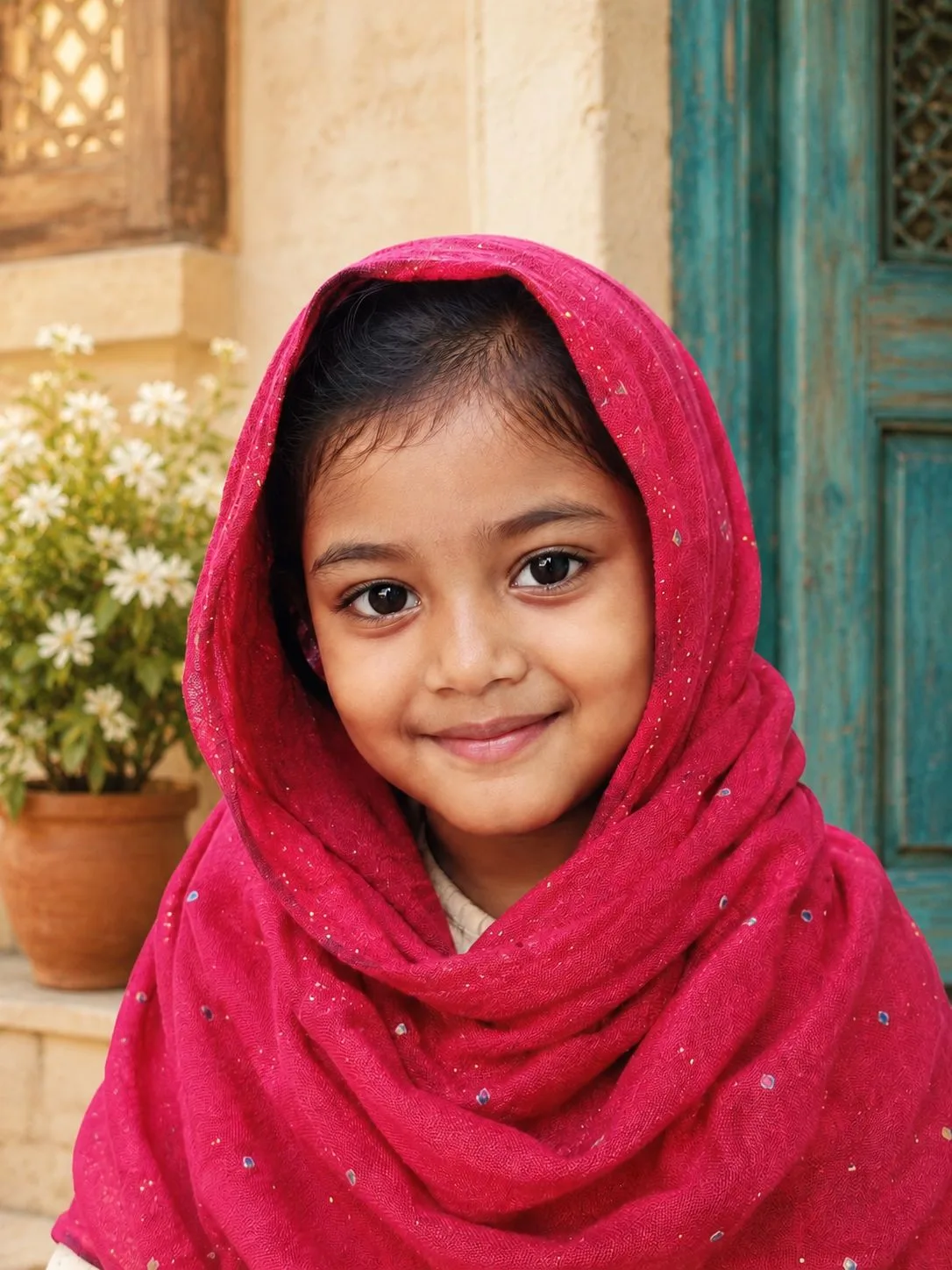
Indian Little Girl Wearing a Red Dupatta
Use the uploaded photograph as the strict identity reference. Preserve the child’s exact facial identity, current age and natural Indian appearance.
IDENTITY PRESERVATION:
Accurately retain the child’s facial structure, eyes, eyebrows, nose, lips, cheeks, jawline, hairline, natural skin tone and every recognisable characteristic.
Do not replace, redesign or beautify the face into another child. Do not change the child’s age, ethnicity, complexion or natural facial proportions.
Avoid skin whitening, artificial eye enlargement, adult facial features, heavy makeup, plastic skin and excessive smoothing. The child must remain naturally and immediately recognisable.
ORIGINAL CONCEPT:
Create a wholesome, premium close-up portrait of the child wearing a traditional raspberry-red dupatta in a beautiful Indian courtyard.
Preserve the innocent direct gaze, gentle smile, modest head-covered styling, turquoise wooden doorway, jasmine flowers, warm cream wall, natural daylight and vertical portrait composition.
POSE AND EXPRESSION:
Position the child upright with the shoulders turned slightly towards camera-left while the face looks directly into the camera.
Use a small, warm, closed-mouth smile that naturally expresses innocence, happiness and comfort.
Keep the head angle, shoulders and posture relaxed. Maintain realistic childlike facial and body proportions without creating an adult fashion pose.
CLOTHING:
Drape a modest raspberry-red cotton dupatta naturally over the child’s head and around both shoulders.
Use soft, breathable woven fabric with tiny restrained gold and pale-blue decorative dots. Create realistic layered folds around the head, neck, chest and shoulders.
The dupatta must frame the face neatly without covering the eyebrows, eyes, cheeks, mouth or chin.
Show a small section of a plain cream-coloured child’s kurta around the neckline. Do not add jewellery, makeup, bindi, logos or adult accessories.
BACKGROUND:
Create a clean, premium traditional Indian courtyard featuring:
- A warm ivory lime-plaster wall with subtle handmade texture
- An elegant weathered turquoise wooden doorway on the right
- Restrained carved wooden jali details
- A terracotta planter on the left
- Fresh green leaves and delicate white jasmine flowers
- A pale sandstone ledge beneath the planter
- Clean and softly blurred architectural details
Keep the courtyard authentic, colourful and tidy. Do not include people, wires, construction clutter, signs or distracting objects.
LIGHTING AND PHOTOGRAPHY:
Use soft natural open-shade daylight coming from the upper-left side. Add a gentle late-afternoon warmth without making the skin excessively orange.
Create soft catchlights in both eyes, accurate warm Indian skin tone and delicate natural shadows.
Use a professional 85mm child-portrait lens appearance with shallow depth of field. Keep the eyes, face and front dupatta folds sharply focused while softly blurring the courtyard.
Show realistic child skin texture, fine hair strands, natural lips and detailed cotton fabric. Apply a fresh colour grade with balanced ivory, turquoise, raspberry-red and natural green tones.
COMPOSITION:
Use a 3:4 vertical close-portrait composition.
Position the child slightly left of centre. Keep the turquoise doorway visible on the right and the jasmine planter softly visible on the left.
Show the complete top of the dupatta and frame the portrait down to approximately mid-chest. Maintain balanced space around the head and shoulders.
The final result must look like a genuine, respectful professional child portrait—not an illustration, painting, doll-like CGI render or obvious AI-generated image.
Do not include text, numbers, logos, borders, signatures or watermarks.
IDENTITY PRESERVATION:
Accurately retain the child’s facial structure, eyes, eyebrows, nose, lips, cheeks, jawline, hairline, natural skin tone and every recognisable characteristic.
Do not replace, redesign or beautify the face into another child. Do not change the child’s age, ethnicity, complexion or natural facial proportions.
Avoid skin whitening, artificial eye enlargement, adult facial features, heavy makeup, plastic skin and excessive smoothing. The child must remain naturally and immediately recognisable.
ORIGINAL CONCEPT:
Create a wholesome, premium close-up portrait of the child wearing a traditional raspberry-red dupatta in a beautiful Indian courtyard.
Preserve the innocent direct gaze, gentle smile, modest head-covered styling, turquoise wooden doorway, jasmine flowers, warm cream wall, natural daylight and vertical portrait composition.
POSE AND EXPRESSION:
Position the child upright with the shoulders turned slightly towards camera-left while the face looks directly into the camera.
Use a small, warm, closed-mouth smile that naturally expresses innocence, happiness and comfort.
Keep the head angle, shoulders and posture relaxed. Maintain realistic childlike facial and body proportions without creating an adult fashion pose.
CLOTHING:
Drape a modest raspberry-red cotton dupatta naturally over the child’s head and around both shoulders.
Use soft, breathable woven fabric with tiny restrained gold and pale-blue decorative dots. Create realistic layered folds around the head, neck, chest and shoulders.
The dupatta must frame the face neatly without covering the eyebrows, eyes, cheeks, mouth or chin.
Show a small section of a plain cream-coloured child’s kurta around the neckline. Do not add jewellery, makeup, bindi, logos or adult accessories.
BACKGROUND:
Create a clean, premium traditional Indian courtyard featuring:
- A warm ivory lime-plaster wall with subtle handmade texture
- An elegant weathered turquoise wooden doorway on the right
- Restrained carved wooden jali details
- A terracotta planter on the left
- Fresh green leaves and delicate white jasmine flowers
- A pale sandstone ledge beneath the planter
- Clean and softly blurred architectural details
Keep the courtyard authentic, colourful and tidy. Do not include people, wires, construction clutter, signs or distracting objects.
LIGHTING AND PHOTOGRAPHY:
Use soft natural open-shade daylight coming from the upper-left side. Add a gentle late-afternoon warmth without making the skin excessively orange.
Create soft catchlights in both eyes, accurate warm Indian skin tone and delicate natural shadows.
Use a professional 85mm child-portrait lens appearance with shallow depth of field. Keep the eyes, face and front dupatta folds sharply focused while softly blurring the courtyard.
Show realistic child skin texture, fine hair strands, natural lips and detailed cotton fabric. Apply a fresh colour grade with balanced ivory, turquoise, raspberry-red and natural green tones.
COMPOSITION:
Use a 3:4 vertical close-portrait composition.
Position the child slightly left of centre. Keep the turquoise doorway visible on the right and the jasmine planter softly visible on the left.
Show the complete top of the dupatta and frame the portrait down to approximately mid-chest. Maintain balanced space around the head and shoulders.
The final result must look like a genuine, respectful professional child portrait—not an illustration, painting, doll-like CGI render or obvious AI-generated image.
Do not include text, numbers, logos, borders, signatures or watermarks.