17

Mera Photo AI @meraphotoai
54 views
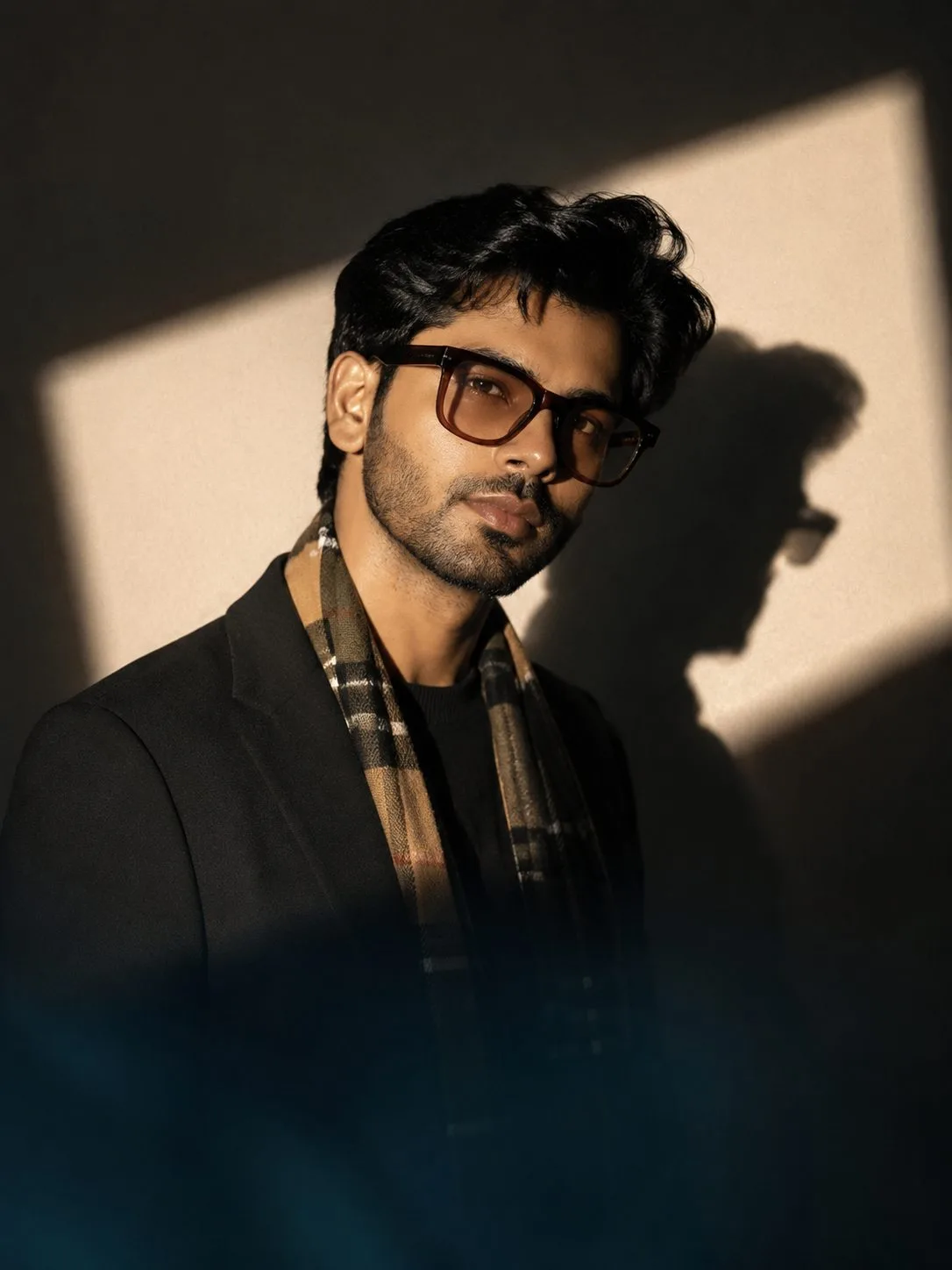
Indian Man Shadow Fashion Portrait AI Prompt
Use the uploaded person’s photograph as the strict identity reference. Preserve their exact real facial identity, natural appearance and current age while recreating the following editorial scene.
IDENTITY PRESERVATION:
Accurately retain the person’s real facial structure, eyes, eyebrows, nose, lips, cheeks, jawline, hairstyle, facial hair, natural Indian skin tone, ethnicity, current age and all recognisable facial characteristics.
Do not replace or redesign the face. Do not change the person’s age, ethnicity or natural complexion. Avoid skin whitening, facial reshaping, plastic skin, excessive smoothing and artificial glamour effects. The person must remain naturally and immediately recognisable.
ORIGINAL CONCEPT:
Create a premium, moody editorial portrait of the person standing against a dark charcoal-grey studio wall.
Preserve the black blazer, patterned scarf, oversized glasses, diagonal window light, strong profile shadow, dark negative space and cinematic high-fashion atmosphere.
POSE AND EXPRESSION:
Show the person in a medium close portrait with the torso turned slightly towards camera-right and the face rotated naturally back towards the camera.
Tilt the head subtly towards the left shoulder and raise the chin by a few degrees.
Use a calm, self-assured expression with relaxed closed lips and a direct gaze through the glasses. Keep the shoulders natural and comfortably lowered.
CLOTHING AND ACCESSORIES:
Dress the person in a premium deep-charcoal tailored blazer worn over a clean matte-black crew-neck shirt.
Drape a narrow woven scarf loosely around the neck. Give the scarf a refined checked pattern containing:
- Camel brown
- Muted olive
- Charcoal black
- Thin ivory lines
Add oversized translucent espresso-brown square optical glasses with a thick polished acetate frame and softly tinted gradient lenses.
Do not add visible branding, necklaces, earrings or excessive jewellery. Show realistic wool, knit, scarf and acetate textures.
BACKGROUND AND SHADOW:
Use a minimalist dark charcoal-grey studio wall.
Create one strong trapezoidal beam of warm window light crossing diagonally behind the person. Produce one crisp but realistic side-profile shadow of the head and glasses inside the illuminated wall area.
The shadow must align correctly with the position of the face, hair, nose, lips and glasses. Do not create duplicate shadows, extra faces or ghost reflections.
Add a subtle defocused deep-teal foreground haze along the lower edge to create cinematic depth. Do not let the haze obstruct the face.
LIGHTING AND PHOTOGRAPHY:
Use hard, warm sunlight entering from the upper-left and front-left. Let the light form a clean geometric patch across the wall and partially illuminate the face.
Add subtle cool fill light from camera-right so the eyes, facial identity and natural Indian skin tone remain visible.
Use deep but controlled shadows with realistic falloff. Avoid completely black facial areas and excessive contrast.
Create an 85mm professional editorial portrait-lens appearance with sharp facial details, realistic hair, natural skin pores and clean glasses.
Apply a sophisticated charcoal, amber and deep-teal colour grade with subtle analogue film grain.
COMPOSITION:
Use a 3:4 portrait aspect ratio with medium close-up framing.
Position the person slightly left of centre and keep the profile shadow clearly visible towards the upper-right.
Show the complete hair, face, shoulders, blazer and scarf. Retain broad negative space around and below the person for a premium editorial composition.
The result must look like a genuine high-fashion photograph—not an illustration, painting, CGI render or obvious AI-generated artwork.
Remove all screenshot elements, including carousel counters, mute icons and social-media overlays. Do not include text, logos, borders, signatures or watermarks.
IDENTITY PRESERVATION:
Accurately retain the person’s real facial structure, eyes, eyebrows, nose, lips, cheeks, jawline, hairstyle, facial hair, natural Indian skin tone, ethnicity, current age and all recognisable facial characteristics.
Do not replace or redesign the face. Do not change the person’s age, ethnicity or natural complexion. Avoid skin whitening, facial reshaping, plastic skin, excessive smoothing and artificial glamour effects. The person must remain naturally and immediately recognisable.
ORIGINAL CONCEPT:
Create a premium, moody editorial portrait of the person standing against a dark charcoal-grey studio wall.
Preserve the black blazer, patterned scarf, oversized glasses, diagonal window light, strong profile shadow, dark negative space and cinematic high-fashion atmosphere.
POSE AND EXPRESSION:
Show the person in a medium close portrait with the torso turned slightly towards camera-right and the face rotated naturally back towards the camera.
Tilt the head subtly towards the left shoulder and raise the chin by a few degrees.
Use a calm, self-assured expression with relaxed closed lips and a direct gaze through the glasses. Keep the shoulders natural and comfortably lowered.
CLOTHING AND ACCESSORIES:
Dress the person in a premium deep-charcoal tailored blazer worn over a clean matte-black crew-neck shirt.
Drape a narrow woven scarf loosely around the neck. Give the scarf a refined checked pattern containing:
- Camel brown
- Muted olive
- Charcoal black
- Thin ivory lines
Add oversized translucent espresso-brown square optical glasses with a thick polished acetate frame and softly tinted gradient lenses.
Do not add visible branding, necklaces, earrings or excessive jewellery. Show realistic wool, knit, scarf and acetate textures.
BACKGROUND AND SHADOW:
Use a minimalist dark charcoal-grey studio wall.
Create one strong trapezoidal beam of warm window light crossing diagonally behind the person. Produce one crisp but realistic side-profile shadow of the head and glasses inside the illuminated wall area.
The shadow must align correctly with the position of the face, hair, nose, lips and glasses. Do not create duplicate shadows, extra faces or ghost reflections.
Add a subtle defocused deep-teal foreground haze along the lower edge to create cinematic depth. Do not let the haze obstruct the face.
LIGHTING AND PHOTOGRAPHY:
Use hard, warm sunlight entering from the upper-left and front-left. Let the light form a clean geometric patch across the wall and partially illuminate the face.
Add subtle cool fill light from camera-right so the eyes, facial identity and natural Indian skin tone remain visible.
Use deep but controlled shadows with realistic falloff. Avoid completely black facial areas and excessive contrast.
Create an 85mm professional editorial portrait-lens appearance with sharp facial details, realistic hair, natural skin pores and clean glasses.
Apply a sophisticated charcoal, amber and deep-teal colour grade with subtle analogue film grain.
COMPOSITION:
Use a 3:4 portrait aspect ratio with medium close-up framing.
Position the person slightly left of centre and keep the profile shadow clearly visible towards the upper-right.
Show the complete hair, face, shoulders, blazer and scarf. Retain broad negative space around and below the person for a premium editorial composition.
The result must look like a genuine high-fashion photograph—not an illustration, painting, CGI render or obvious AI-generated artwork.
Remove all screenshot elements, including carousel counters, mute icons and social-media overlays. Do not include text, logos, borders, signatures or watermarks.